Squamish, BC · Alternative photography

Somewhere between
photograph
& print.

I'm a photographer and designer based in Squamish, BC, working with 19th-century processes that are slow, material, and stubbornly beautiful.

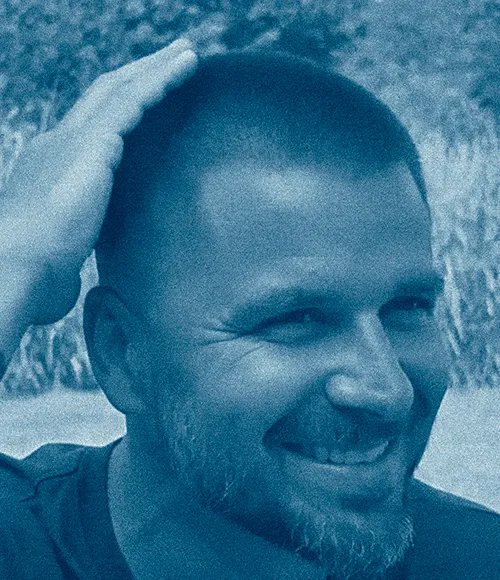
Portrait
Background

"I came to alternative processes through frustration with how easy it had become to make photographs."

I've been making photographs for most of my adult life — film first, then digital, then back toward something older. The turning point was cyanotype: coating paper with two chemicals, setting it in the sun, washing it in water, and watching a Prussian blue image appear from nothing. It felt like the first time I'd actually made something rather than captured it.

That process led me to kallitype, to hybrid printing, and eventually to building a studio where I could work slowly and seriously with these materials. The studio is in Squamish, and the mountains and rainforest here are present in the work — not as subjects exactly, but as a kind of pressure. The light changes constantly. The humidity matters. The weather is part of the process.

The prints I make are editions of ten or fewer. Every one is hand-coated, contact-printed, and developed by hand. The variability between prints isn't a flaw — it's the record of the making. No two are identical, even within an edition.

The workshops came later, out of a growing sense that people wanted to understand not just what the prints looked like but what it felt like to make them. There's something particular about working with chemistry and light and paper with your hands. The workshops are an attempt to share that.

How I work

The approach

I

Slow on purpose

Every print takes a full day from coating to finished, dry object. I don't batch-print. Each edition is worked through as a discrete project — with time between exposures to assess, adjust, and occasionally start again.

II

Small editions

No print runs more than ten. The editions are small because the variability between prints is meaningful — each one is slightly different, and keeping editions small honours that. When an edition is gone, it's gone.

III

Material honesty

The chemistry, the paper, the light source — all of it is disclosed. Collectors get full process notes with every print: exactly what was used, how it was made, and what it needs to remain stable for a hundred years.

Location
North Vancouver, BC
In-studio & mobile workshops available
Working processes
Cyanotype · Kallitype · Hybrid
19th-century alternative processes
Edition size
10 or fewer
Hand-signed, process-noted
Workshops since
Small groups · Max 4
Studio & outdoor in summer months
Commission · Enquire · Collaborate

Have a print in mind, or want to talk about a commission?

Say hello →
Common questions

Things people ask

Anything not covered here — get in touch and I'll reply within 48 hours.

Do I need any experience to attend a workshop? +

No experience at all. The cyanotype introduction and the family and mindful printing workshops are specifically designed for people who've never worked with chemistry, photography, or printmaking. The process is simple enough to learn in minutes and interesting enough to spend years with — both are true at once.

The one exception is the digital negatives workshop, which builds on the introduction. I'd recommend doing the intro first, though if you have a darkroom or alternative process background, get in touch and we can talk about whether it makes sense to start there.

What should I wear or bring? +

Wear something you don't mind getting a small amount of chemistry on. Cyanotype sensitiser is iron-based and will stain fabric a yellow-orange before it oxidises to blue on contact with light — it usually washes out, but not always. Avoid light-coloured clothing you care about.

Everything else is provided — chemistry, paper, trays, UV unit, objects to print with. If you're attending the digital negatives workshop, bring your images on a USB drive or have them accessible on your phone. For the family workshop, bring leaves, feathers, or flowers foraged on the walk over — the more interesting the shapes, the better the prints.

Can I book a private session for a group? +

Yes — private sessions are available and are a good option for birthdays, work events, hen parties, or groups who simply want the studio to themselves on a date that suits them.

Private sessions run for the same length as regular workshops and accommodate up to four people. Send a message with your preferred dates and I'll let you know availability.

Can workshops come to me? What about outside in summer? +

Yes to both. Workshops are structured so I can bring everything to you — the chemistry, paper, UV unit (or we use sunlight), trays, and all equipment. This works well for larger gatherings, events, or groups that prefer to host.

In the summer months, we can work entirely outside. Cyanotype is a sun process — it was invented outdoors in Victorian England. Printing in sunlight on a bright day, surrounded by plants to print with, is one of the most direct ways to understand how the chemistry works. It also makes for a very good afternoon.

What's the cancellation and refund policy? +

Full refund if you cancel 7 or more days before the session. 50% refund for cancellations between 3–7 days. No refund for cancellations within 3 days, though I'll do my best to transfer your spot to a future date if you give as much notice as possible.

If I need to cancel a session for any reason, you'll receive a full refund or the option to transfer to another date. Payment is taken on booking confirmation — not at the time of enquiry.

Get in touch

Say hello

For workshop enquiries, print questions, commissions, or anything else — use the form or reach out directly. I read and reply to everything personally, usually within 48 hours.

Location Squamish, BC, Canada
Response time Within 48 hours

I read and reply to everything personally. No auto-responses.